Introduction
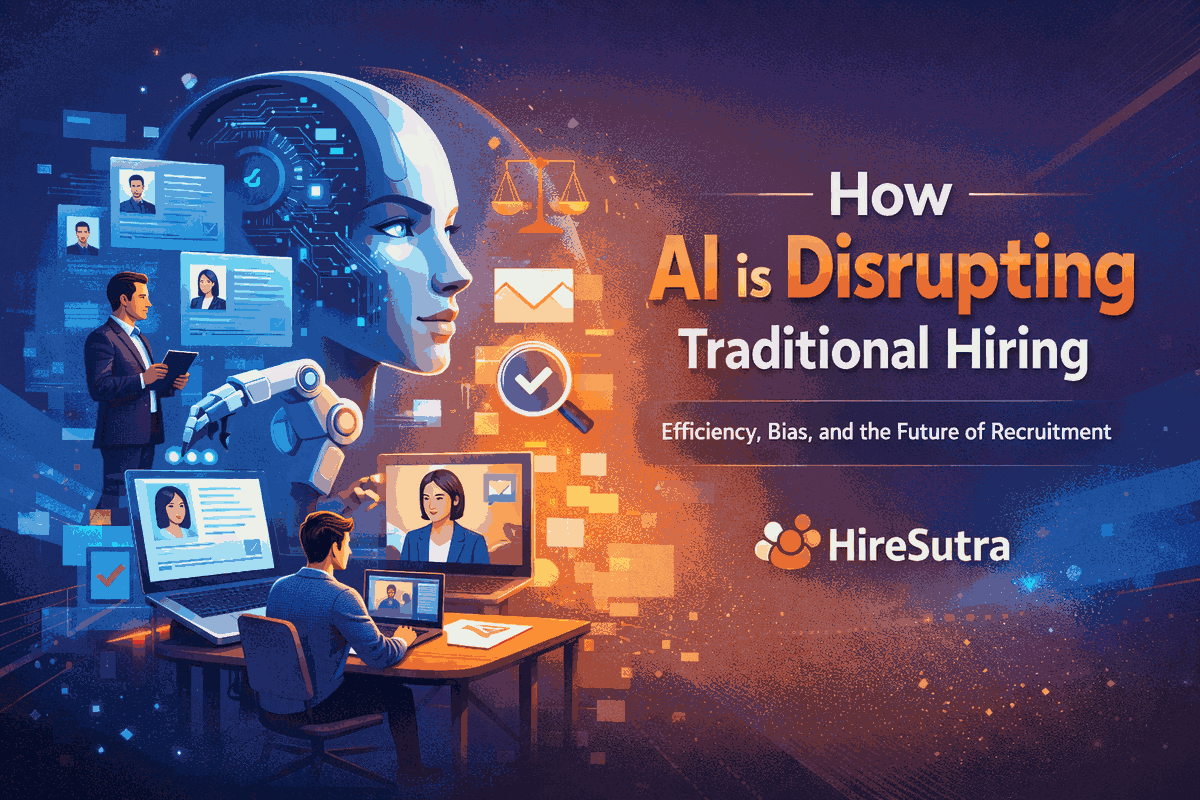
The hiring landscape is undergoing a fundamental transformation driven by artificial intelligence (AI). Traditionally, recruitment relied heavily on human judgment, manual résumé screening, and unstructured interviews. However, with the exponential growth in job applications and the need for faster, more accurate hiring decisions, organizations are increasingly adopting AI-driven solutions.
Recent studies indicate that over 50% of companies already use AI in hiring, and adoption is expected to grow rapidly. AI is no longer just a supporting tool — it is becoming a core decision-making layer in recruitment.
How AI Is Transforming Traditional Hiring
Automated Resume Screening
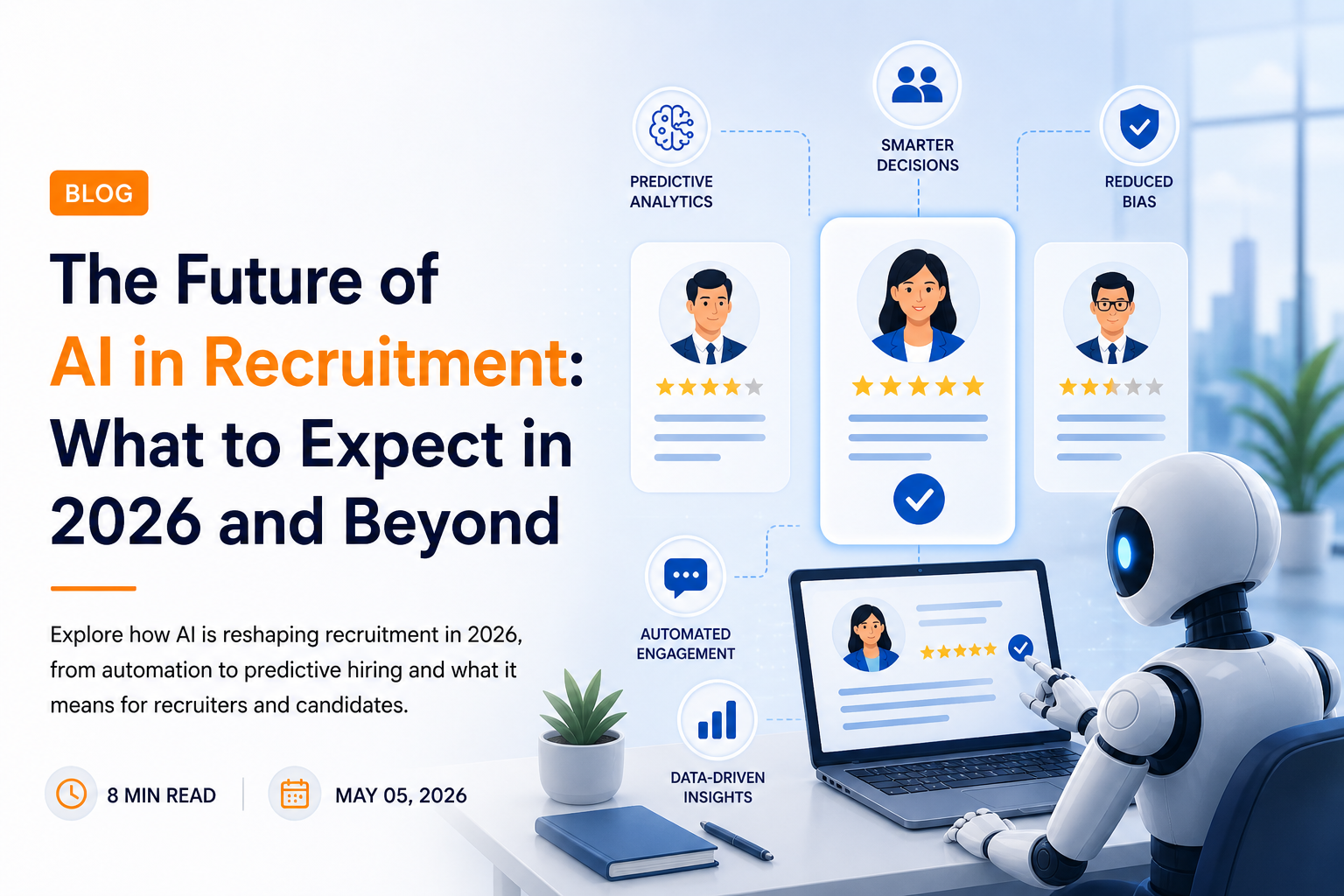
AI-powered Applicant Tracking Systems (ATS) can scan thousands of resumes in seconds, identifying relevant skills, experience, and keywords. This eliminates manual screening bottlenecks and significantly improves recruiter productivity.
AI-Based Interviews
AI-led interviews analyze speech, tone, and responses in a structured way. These systems standardize evaluation and reduce human bias in early screening stages while improving consistency across candidates.
Predictive Hiring & Talent Matching
AI models leverage historical data to predict candidate success, cultural fit, and retention probability. This transforms hiring into a data-driven process rather than relying solely on recruiter intuition.
AI-Powered Candidate Engagement
AI chatbots streamline communication by answering queries, scheduling interviews, and guiding candidates through the hiring process, improving the overall candidate experience.
Key Benefits of AI in Hiring
Speed and Efficiency
AI can process large volumes of applications in minutes, reducing recruiter workload by up to 40–50% and significantly shortening hiring cycles.
Improved Quality of Hire
By using structured evaluation models, AI improves job-role matching, increases interview success rates, and reduces hiring errors.
Scalability
AI enables organizations to scale hiring efforts efficiently, especially in campus hiring, mass recruitment, and high-growth scenarios.
Skills-Based Hiring
AI shifts hiring focus from degrees to skills and competencies, enabling more inclusive hiring and expanding opportunities for non-traditional candidates.
Risks and Challenges
Algorithmic Bias
AI systems can inherit biases from historical data. A well-known example is Amazon's AI hiring tool, which penalized resumes containing the word 'women's', highlighting the risk of reinforcing gender bias.
Lack of Transparency
Many AI systems operate as black boxes, making it difficult for candidates to understand why they were rejected, leading to trust and compliance issues.
Candidate Experience Risks
Some candidates feel uncomfortable with AI interviews due to lack of human interaction and uncertainty around automated evaluation.
Privacy Concerns
AI hiring tools may collect sensitive behavioral and biometric data, raising concerns about data privacy, consent, and ethical usage.
Legal and Regulatory Implications
Governments are increasingly regulating AI in hiring. The EEOC in the U.S. enforces anti-discrimination laws, while New York City requires bias audits for AI hiring tools. The EU AI Act classifies hiring AI systems as high-risk and mandates strict compliance measures.
Strategic Implications for Companies
AI is shifting the role of recruiters toward strategic decision-making and relationship-building. The future of hiring lies in a hybrid model where AI handles scale and humans provide judgment.
Organizations that adopt ethical AI practices, ensure transparency, and maintain human oversight will gain a competitive advantage in talent acquisition.
Conclusion
AI is transforming hiring by improving efficiency, scalability, and decision quality. However, challenges such as bias, transparency, and privacy must be addressed. The future of hiring lies in combining AI capabilities with human intelligence to create fair, efficient, and scalable recruitment systems.
References
Reporting on Amazon's AI recruiting tool that showed bias against women.