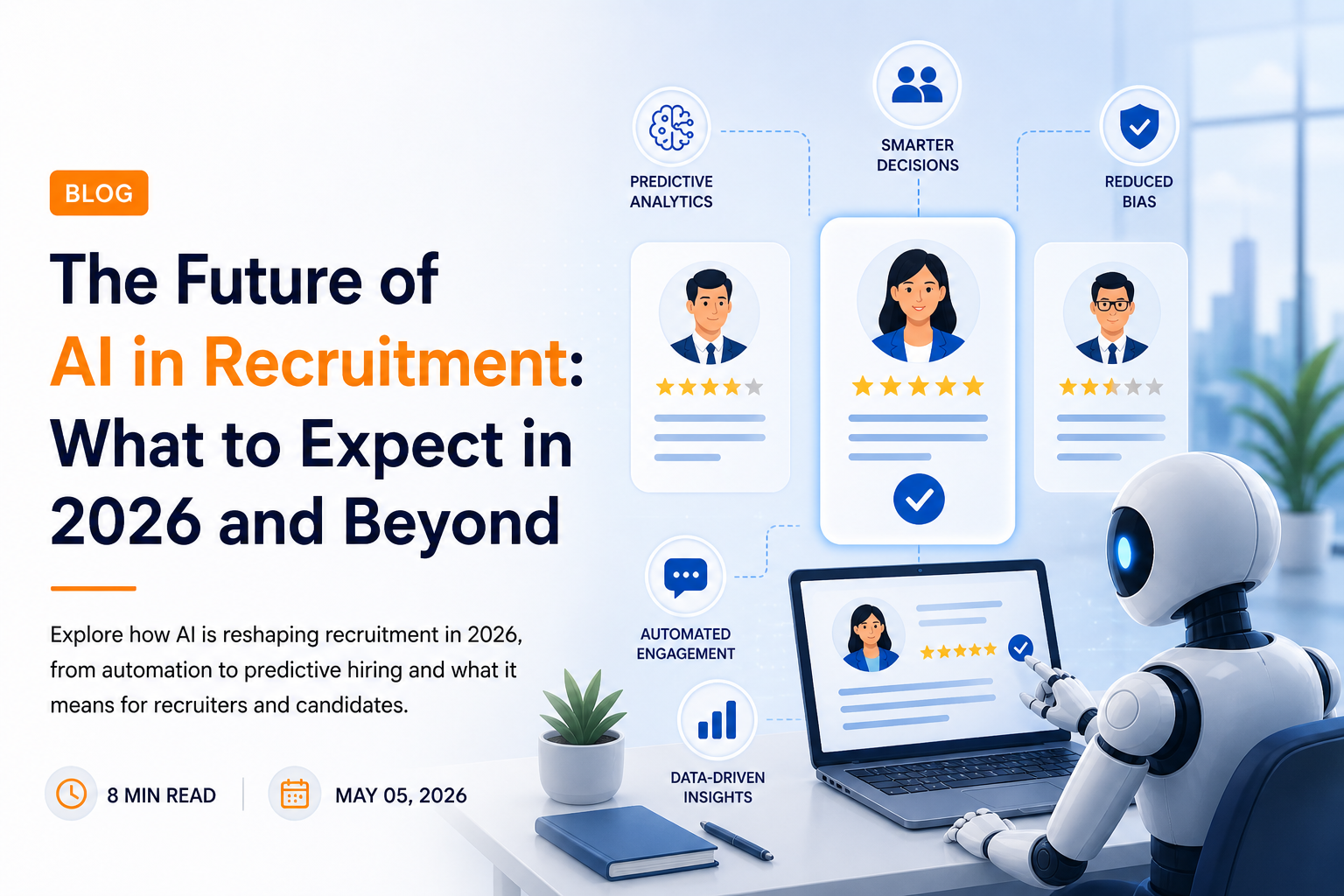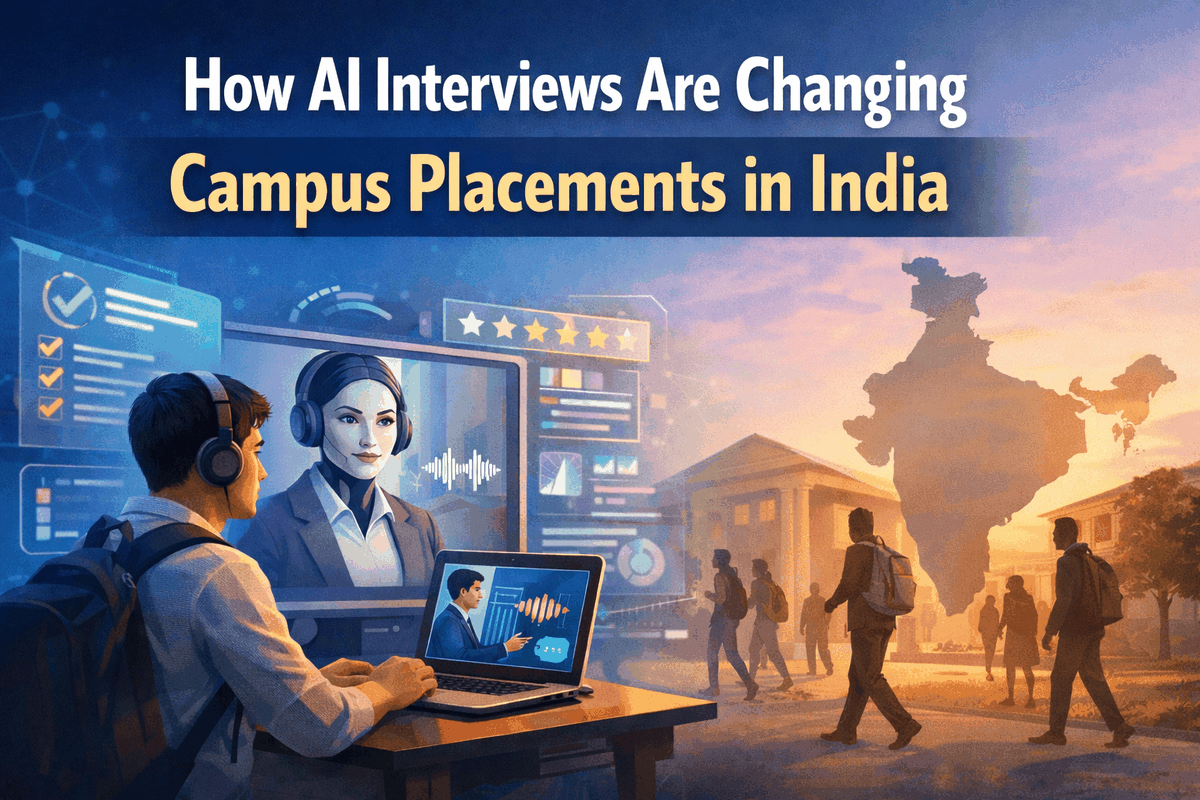
Campus placements have long been a critical bridge between higher education and employment in India. Every year millions of students participate in placement drives hoping to secure their first professional opportunity. However, traditional campus recruitment processes were designed for a smaller job market and often struggle to evaluate large volumes of candidates effectively. Artificial intelligence is now emerging as a powerful tool that can help both students and recruiters navigate this challenge.
AI-powered interview platforms are increasingly being used to simulate real interview environments, evaluate candidate responses, and generate data-driven insights. These tools are helping colleges improve placement outcomes while enabling recruiters to identify job-ready talent more efficiently. As organizations adopt AI-driven hiring workflows, campus placements are undergoing a significant transformation.
Problems With Traditional Campus Interviews
Traditional campus recruitment systems rely heavily on resumes, academic scores, and short interviews conducted under time pressure. While these methods have been used for decades, they often fail to capture a student's real capabilities or potential.
- Overdependence on academic scores and resumes rather than real skills
- Human bias during shortlisting and interviews
- Generic aptitude tests that do not measure role-specific abilities
- Limited time for recruiters to evaluate large candidate pools
- Lack of structured feedback for students after interviews
These challenges can lead to hiring mismatches where capable students are overlooked while recruiters struggle to identify candidates who are truly prepared for real-world roles. As job requirements evolve rapidly, companies increasingly seek tools that can evaluate skills, problem-solving ability, and communication in a more structured way.
AI Interview Simulations
AI interview platforms are designed to simulate real interview scenarios using conversational AI, natural language processing, and machine learning. These platforms ask role-specific questions, analyze candidate responses, and evaluate both technical knowledge and communication skills.
- Adaptive interview questions that adjust based on candidate responses
- Role-specific simulations for technical, behavioral, and case interviews
- Video or voice analysis to evaluate communication and confidence
- Automated scoring of answers using machine learning models
- Practice environments that replicate real hiring interviews
For students preparing for campus placements, AI mock interviews provide a safe environment to practice repeatedly. Instead of attending only a few mock interviews conducted by placement cells, students can simulate dozens of interview scenarios and build confidence before actual recruitment rounds.
Standardized Evaluation
One of the biggest advantages of AI-driven interviews is standardized evaluation. Traditional interviews often vary depending on the interviewer's expectations, mood, or interpretation of answers. AI systems apply consistent evaluation criteria across all candidates.
AI models compare candidate responses with predefined competency frameworks and job requirements. By analyzing factors such as clarity, relevance, logical structure, and problem-solving ability, these systems create a structured score for each candidate. This data-driven approach reduces subjective decision-making and allows recruiters to compare candidates more fairly.
However, experts emphasize that AI should augment human decision-making rather than replace it entirely. Hybrid hiring models that combine algorithmic insights with recruiter judgment are considered the most reliable approach.
Candidate Feedback
One of the major limitations of traditional campus interviews is the absence of meaningful feedback. Students often complete multiple interview rounds without understanding what they did well or where they need improvement.
AI interview platforms address this problem by providing instant feedback after each practice session. These systems analyze responses and generate insights about communication clarity, structure of answers, confidence levels, and relevance to the question asked.
- Immediate feedback on answer structure and clarity
- Identification of filler words and communication gaps
- Suggestions for improving storytelling and examples
- Progress tracking across multiple interview sessions
- Performance comparisons with previous attempts
This continuous feedback loop allows students to refine their interview strategies and improve performance before facing real recruiters.
Benefits for Colleges
Colleges and universities also benefit significantly from integrating AI interview platforms into their placement programs. These tools enable institutions to prepare students more effectively and demonstrate measurable outcomes to recruiting companies.
- Higher placement success rates through better candidate preparation
- Objective evaluation of student readiness for industry roles
- Stronger credibility with recruiters and hiring partners
- Identification of skill gaps across student cohorts
- Reduced administrative burden on placement cells
AI-driven insights also help colleges align their training programs with industry expectations. By analyzing performance data from interview simulations, institutions can identify which skills students lack and introduce targeted training programs.
Conclusion
AI interviews are rapidly transforming campus placements in India. By enabling scalable interview simulations, standardized candidate evaluation, and detailed feedback, AI platforms are improving how students prepare for interviews and how recruiters identify talent.
While AI cannot fully replace human recruiters, it significantly enhances the efficiency and fairness of the hiring process. For students, AI mock interviews provide an opportunity to practice repeatedly and build confidence. For colleges, these tools help improve placement outcomes and strengthen relationships with employers.
As India's workforce becomes increasingly competitive, AI-powered campus placement platforms are likely to become a core part of the hiring ecosystem. Institutions that adopt these technologies early will be better positioned to prepare their students for the future of work.