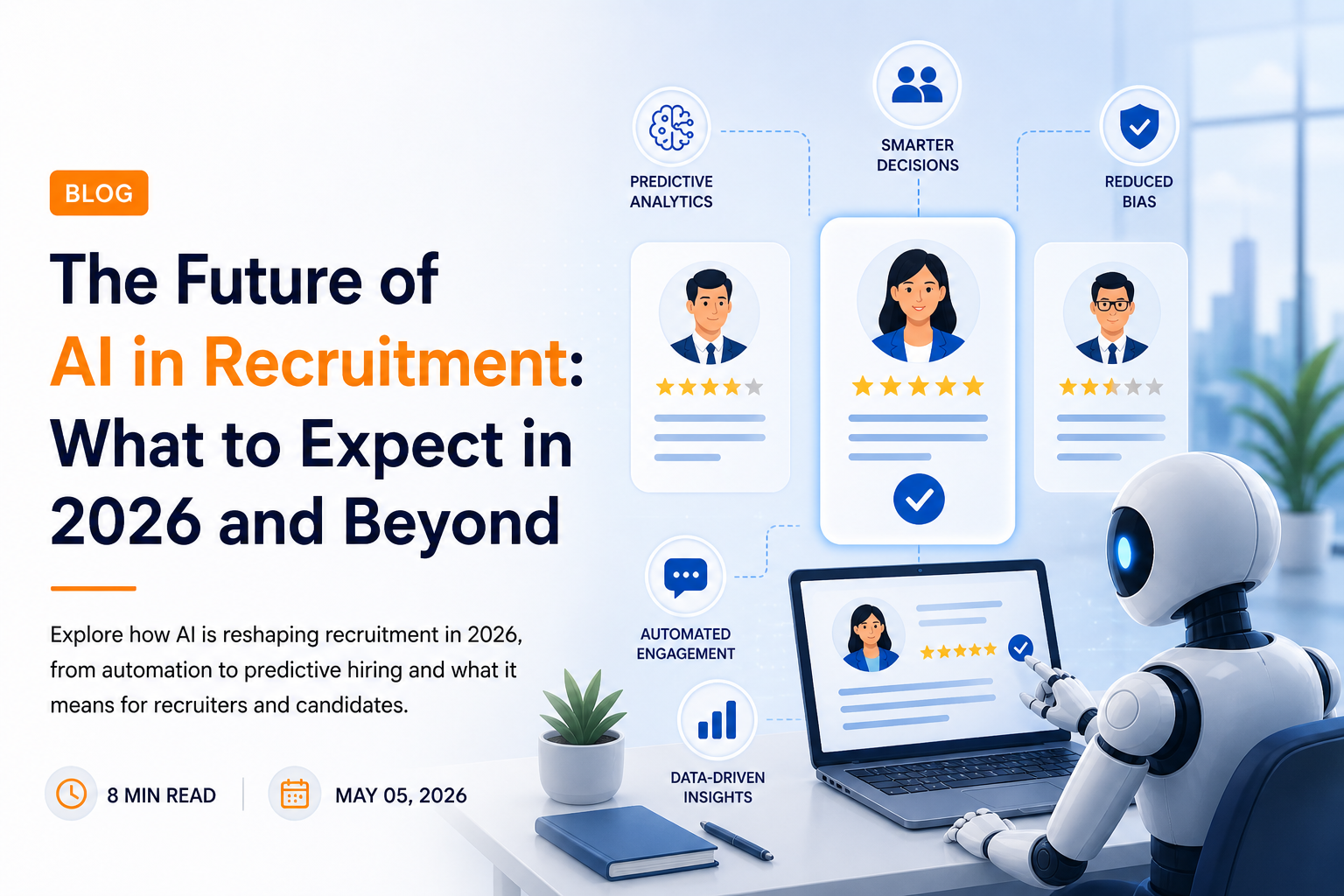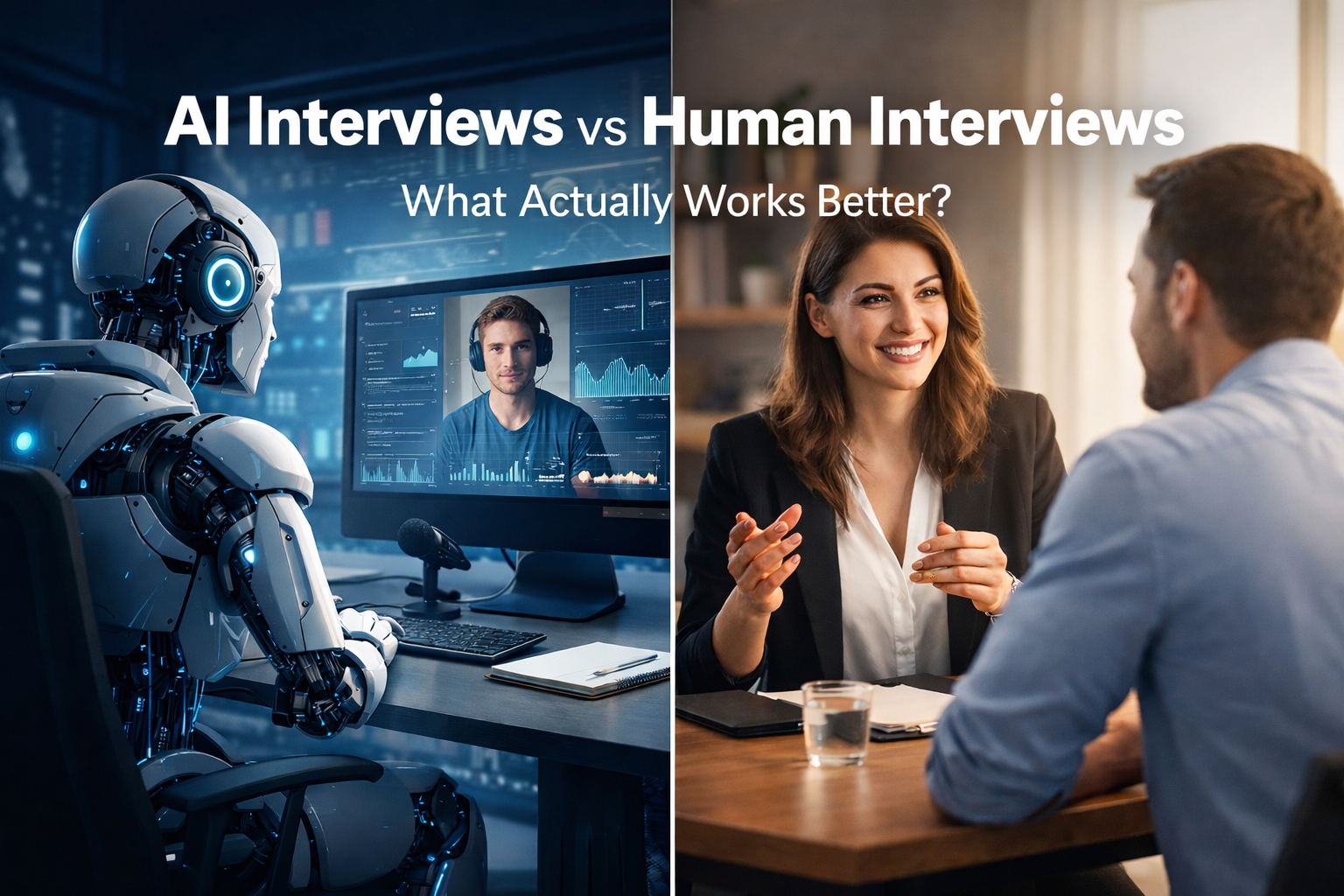
Hiring has always been deeply human. Interviews have long been the foundation of recruitment, helping companies evaluate skills, intent, and fit. But today, that model is evolving rapidly with the rise of AI-powered interviews.
AI is no longer just screening resumes—it is asking questions, evaluating answers, and generating insights at scale. This raises an important question: what actually works better—AI interviews or human interviews?
Why AI Interviews Are Growing Fast
Recruitment teams are under pressure. A single job posting can attract hundreds of candidates, and recruiters often spend only a few seconds reviewing each resume. Screening calls consume a large portion of early-stage hiring time.
AI interviews are emerging as a solution to this inefficiency. They enable structured conversations, consistent evaluations, and instant reporting—helping companies move faster without compromising baseline quality.
Where AI Interviews Perform Better
1. Speed and Scale
AI systems can interview large numbers of candidates simultaneously, something human recruiters cannot match. This dramatically reduces screening time and improves time-to-hire.
2. Structured Evaluation
AI ensures every candidate is assessed using the same questions and scoring logic. This creates consistency and reduces variability in evaluation, making comparisons more reliable.
3. Early-Stage Efficiency
For initial screening, companies need to filter candidates based on communication, relevance, and basic competence. AI handles this efficiently, allowing recruiters to focus on higher-value interactions.
- Faster screening cycles
- Standardized candidate evaluation
- Reduced recruiter workload
- Improved shortlist quality
Where Human Interviews Still Win
1. Emotional Intelligence
Human interviewers can read tone, intent, and subtle behavioral cues that AI still struggles to fully interpret. These signals often play a critical role in hiring decisions.
2. Relationship Building
Interviews are not just about evaluation—they are also about selling the role. Humans build trust, create rapport, and influence candidate decisions in ways AI cannot yet replicate.
3. Handling Complexity
Experienced interviewers can adapt conversations, explore unconventional profiles, and make judgment calls in ambiguous situations. This flexibility remains a uniquely human strength.
The Real Problem: Human Interviews Are Not Perfect
Human interviews are often inconsistent and biased. Many organizations rely on unstructured conversations, which are less predictive and vary significantly between interviewers.
The real comparison is not AI versus perfect humans—it is AI versus flawed, inconsistent hiring processes that already exist.
The Future: Hybrid Interviews
The most effective hiring approach combines AI and human interviews. AI handles scale and structure, while humans focus on deeper evaluation and decision-making.
- AI interviews for screening and standardization
- Human interviews for final decisions and culture fit
- Faster hiring without sacrificing quality
- Better candidate experience overall
Final Verdict
AI interviews excel in speed, consistency, and efficiency. Human interviews excel in judgment, trust, and nuance.
The real winner is not one over the other—it is a hybrid hiring model that combines the strengths of both.