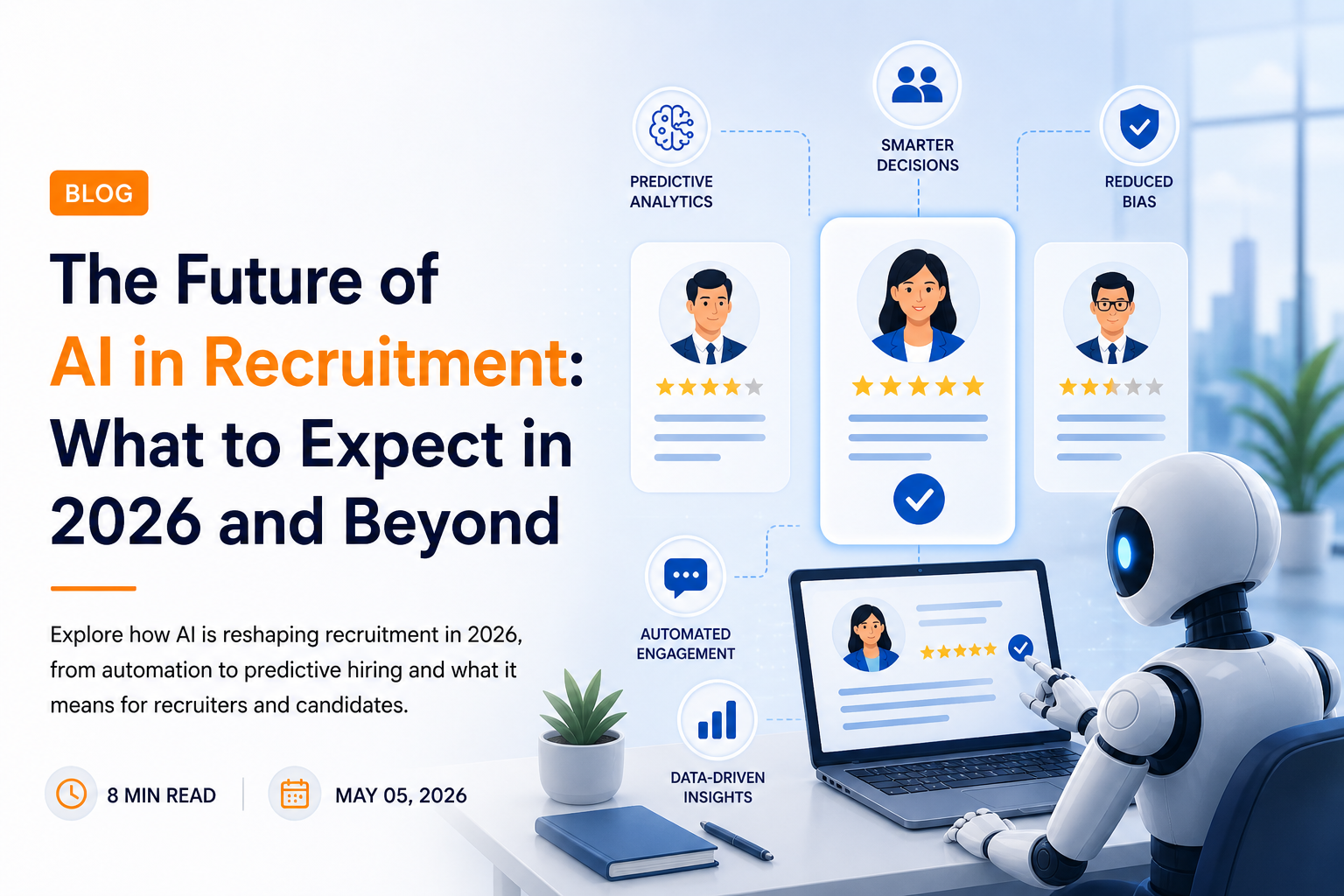
Hiring is one of the most critical business decisions, yet most organizations still struggle with slow processes, rising costs, and inconsistent outcomes. In 2025, nearly 60% of companies reported an increase in time-to-hire, and 90% failed to meet their hiring targets. The challenge is clear: traditional hiring methods are no longer sufficient.
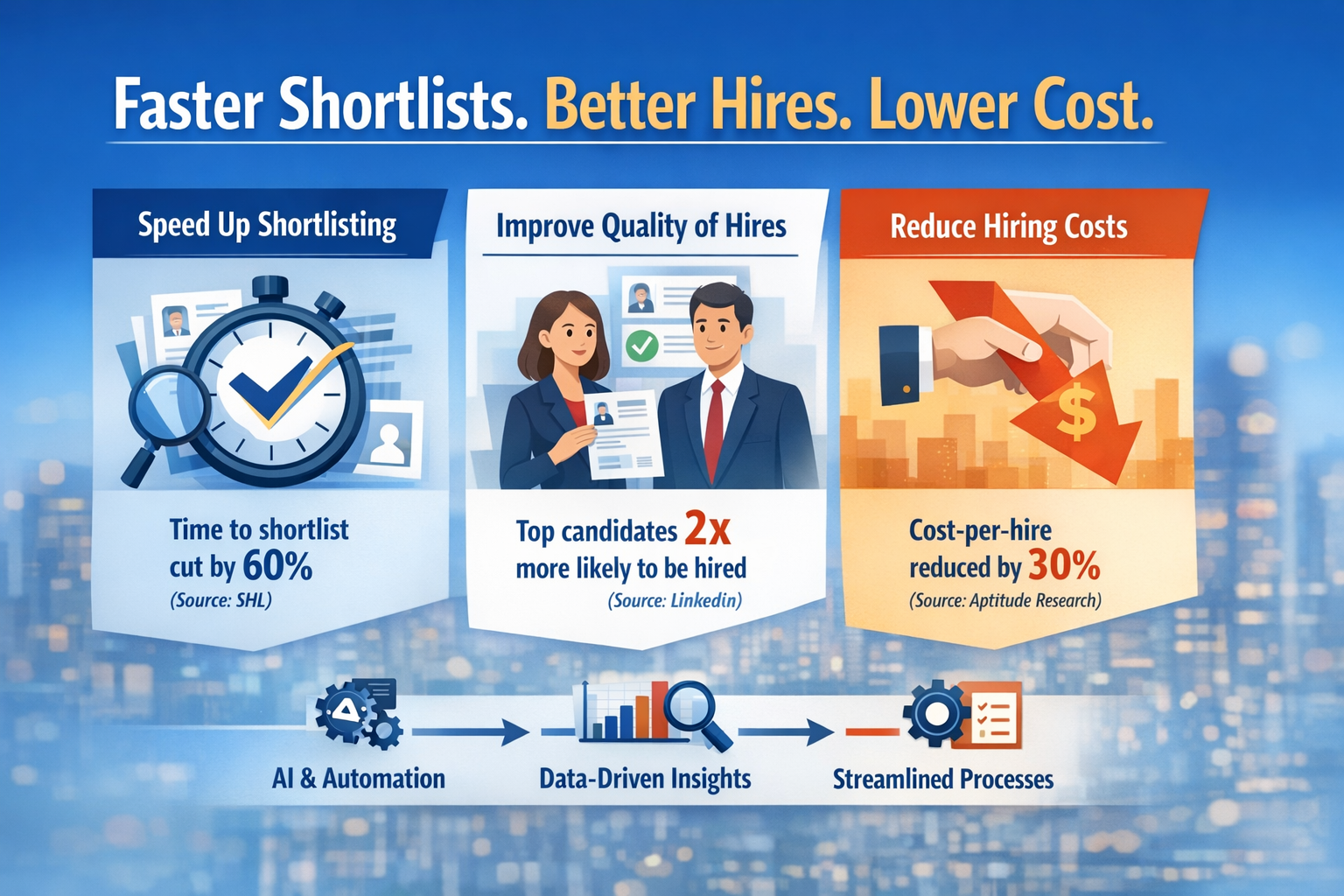
The opportunity, however, is equally clear. Organizations that combine AI-driven efficiency, structured evaluation, and strong candidate experience are seeing faster shortlists, better hires, and significantly lower costs.
1. Faster Shortlists Through AI and Automation
Recruiters today are overwhelmed with volume. With applications doubling in many industries, the ability to quickly identify relevant candidates has become a competitive advantage. AI is playing a crucial role here by scanning large talent pools, ranking candidates based on job-fit, and automating repetitive tasks.
Studies indicate that AI-powered recruitment tools can reduce time-to-hire by up to 50% while improving the quality of shortlisted candidates. Additionally, 85% of recruiters now use AI to automate administrative work, saving up to 10 hours per week.
The shift is clear: recruitment is moving from manual filtering to intelligent prioritization.
2. Better Hires with Structured Evaluation
Speed without accuracy leads to costly mistakes. The real differentiator in hiring is not how fast you hire, but how well you hire.
Research shows that structured interviews are twice as predictive of job performance compared to unstructured conversations. With a predictive validity of 0.51 versus 0.38, structured hiring significantly improves decision quality.
Standardized questions, scoring rubrics, and competency-based evaluation reduce bias and ensure consistency across candidates. Organizations that adopt structured hiring frameworks see lower attrition, better performance, and stronger team outcomes.
3. Candidate Experience Drives Hiring Success
Even the best hiring process fails if candidates drop off or decline offers. Candidate experience has emerged as a critical success factor in modern recruitment.
Data shows that 66% of candidates accept job offers based on a positive hiring experience, while 26% decline offers due to poor communication or unclear processes.
Candidates today expect transparency, speed, and personalization. Long application processes, delayed responses, and impersonal interactions can significantly reduce conversion rates.
Balancing automation with human interaction is key to building trust and improving acceptance rates.
4. Lower Costs Through Smarter Hiring
Hiring inefficiencies directly impact the bottom line. The average cost-per-hire has steadily increased over the years, with specialized roles often exceeding significant budgets.
More importantly, the cost of a bad hire can range from 50% to 250% of an employee's annual salary. This includes lost productivity, rehiring expenses, and training costs.
By improving screening accuracy, reducing hiring cycles, and increasing retention, organizations can dramatically lower overall hiring costs.
5. The New Hiring Playbook
To achieve faster shortlists, better hires, and lower costs, organizations need to rethink their hiring strategy:
- Automate repetitive tasks such as screening, scheduling, and communication
- Adopt AI-driven sourcing to identify high-potential candidates early
- Implement structured interviews and data-driven evaluation frameworks
- Enhance candidate experience through transparency and timely communication
- Measure success through quality-of-hire, retention, and performance metrics
Conclusion
Recruitment is no longer just a function-it is a strategic advantage. Organizations that embrace intelligent hiring practices are not only filling roles faster but building stronger, more resilient teams.
The future belongs to those who can combine speed with precision, technology with human judgment, and efficiency with experience.
Faster shortlists. Better hires. Lower cost. This is not just a goal-it is the new standard.
References
GoodTime Hiring Insights Report 2026
Vervoe AI Hiring Trends 2026
Schmidt & Hunter Research on Structured Interviews
CareerPlug Candidate Experience Report 2025
Industry benchmarks on cost-per-hire and hiring efficiency